
Doubts are emerging about Pakistan's role in mediating peace negotiations between the US and Iran, with suggestions that Islamabad's efforts are stalling and failing to secure a definitive response from the United States.

The White House has responded cautiously to reports of Pakistan offering to mediate between the US and Iran, amid ongoing tensions and potential talks.

We are back to the 1971 moment with both China and the US supporting Pakistan, asserts Colonel Anil A Athale (retd).

'Pakistan has pitched Islamabad as a possible venue for talks as early as this week involving senior figures from the Trump administration and Iran,' the Financial Times reported.

'The White House lunch that Trump hosted for Munir last year came just after Munir returned from a visit to Iran, at a moment when Israel and Iran were at war.' 'Trump said after that lunch that the Pakistanis know Iran very well. He likely views Munir as a useful interlocutor that can give helpful insights on Iran.'

Pakistan and Qatar have successfully mediated separate meetings between US and Iranian negotiators in Doha, reporting positive progress on a Memorandum of Understanding aimed at West Asian peace. Further discussions are planned after the funeral of former Iranian Supreme Leader Ayatollah Ali Khamenei.

US President Donald Trump announced a finalised peace deal between the US and Iran, set for signing on June 19 in Switzerland, with key figures like J D Vance, Steve Witkoff, and Jared Kushner from the US side, and Abbas Araghchi and Mohammad Bagher Ghalibaf representing Iran, alongside Pakistani mediators Field Marshal Asim Munir, Shehbaz Sharif, Ishaq Dar, and Mohsin Naqvi, playing crucial roles in the diplomatic breakthrough.

The United States' historical strategic alignment with Pakistan, dating back to the Cold War, has consistently aimed to create a political and military parity with India, despite India's significantly larger size and resources. This long-standing relationship continues to influence regional dynamics, particularly in West Asia and the Indo-Pacific.

Pakistan summoned US Charge d'Affaires Natalie Baker to lodge a "strong demarche" following remarks by US Ambassador to India Sergio Gor, who stated that Jammu and Kashmir is an important part of India. Pakistan's Foreign Office condemned Gor's characterisation, asserting that Jammu and Kashmir is an internationally recognised disputed territory and that the US ambassador's statement contradicted the US's long-standing position and commitment to international law.

US Secretary of State Marco Rubio met with Pakistan's Foreign Minister Ishaq Dar amid American demand that countries mediating the peace talks with Iran join the Abraham Accords and establish diplomatic and economic ties with Israel.

Pakistan Prime Minister Shehbaz Sharif on Thursday signed the historic peace deal between the United States and Iran as a guarantor; the agreement will see the immediate reopening of the Strait of Hormuz and the lifting of the US naval blockade.

Donald Trump issued a fresh warning to Iran as negotiations remained deadlocked over uranium stockpiles, sanctions relief and war compensation. The US President's sharp remarks came just hours after Iranian media revealed Washington's core conditions for resuming negotiations.

US President Donald Trump on Friday said that the 'ceasefire' that he got done between India and Pakistan was a favour to their army chief Asim Munir and Prime Minister Shehbaz Sharif.

Pakistan Prime Minister Shehbaz Sharif announced that Pakistan would host the signing ceremony of a peace agreement between the US and Iran in Switzerland on June 19, calling it a "historic milestone" that ends a 107-day conflict and promises global economic stability.

Iran has denied sending a delegation to Islamabad for peace talks with the United States, contradicting Pakistan's claims of mediating the negotiations. The denial highlights a lack of confidence in Pakistan's ability to ensure security for high-level participants and underscores the fragile nature of diplomatic efforts between the US and Iran.
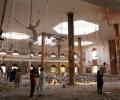
Pakistan has backed China's claim that Beijing played a role in defusing tension with India during Operation Sindoor, calling it 'diplomacy for peace' that was part of international efforts.

Pakistan's Foreign Minister Ishaq Dar has been actively involved in mediating between Saudi Arabia and Iran following the outbreak of war, ensuring the safety of Pakistani citizens in affected regions.

Former US President Donald Trump reiterated his claim of mediating the India-Pakistan conflict, stating that 11 jets were shot down during the May 2023 hostilities. He also suggested the conflict could have escalated to a nuclear level and claimed credit for averting a major catastrophe, a claim consistently denied by India which maintains no third-party intervention occurred.

China's week-long mediation between Pakistan and Afghanistan concludes without a formal agreement, though Beijing claims progress in exploring solutions to resolve their differences.

Israel has strongly condemned Pakistan Defence Minister Khawaja Asif's "outrageous" remarks calling for Israel's annihilation and labelling it "evil" and a "curse for humanity", raising doubts about Pakistan's role as a "neutral arbiter" for peace.
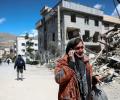
Fleur Hassan-Nahoum, special envoy, foreign ministry of Israel, has asserted that the situation has effectively been a "multi-front regional conflict" since its inception, while claiming significant military and strategic gains against adversarial forces.

Talks between Iran and the US in Pakistan concluded without a deal due to disagreements over key issues, including Iran's nuclear programme and sanctions, despite efforts to find common ground.

After the United States and Iran agreed to a two-week ceasefire and expressed hope for lasting peace, Pakistan took much of the credit for playing mediator between the two countries. However, Jonathan Schanzer, Executive Director at the Foundation for Defence of Democracies and former US Treasury counterterrorism analyst, said Pakistan is deeply indebted to China.
Islamabad's attempt to position itself as a mediator in the West Asia conflict has come to naught with the Iranian side refusing to meet any US-led delegation in Pakistan, reports the Wall Street Journal.
Pakistan Prime Minister Shehbaz Sharif announced that a US-Iran peace deal is on the verge of finalisation, potentially within the next 24 hours, marking a significant diplomatic breakthrough after months of intense negotiations.

Pakistan capital Islamabad is emerging as the leading venue for the next round of technical negotiations between the US and Iran, a media report said Sunday.

Sonia Gandhi criticised PM Modi's Israel visit, calling it a "bewildering strategic decision" amid the regional conflict.

The US and Iran have agreed on a roadmap aimed at reaching a final agreement within 60 days after hours-long talks at the Swiss resort of Burgenstock, mediators Qatar and Pakistan said on Monday, describing the progress as "encouraging."

US President Donald Trump threatened to bomb Iran if a deal is not reached before the ceasefire ends, while Pakistan urged both sides to extend the truce and pursue diplomacy.
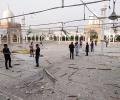
Chinese Foreign Minister Wang Yi stated that China mediated tensions between India and Pakistan, a claim disputed by India which maintains that the matter was resolved bilaterally.
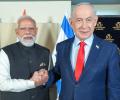
The Congress party has criticised the Indian government's diplomatic strategy, claiming a 'severe setback' if reports of Pakistan mediating between the US-Israel and Iran are accurate. The party alleges Pakistan's diplomatic engagement has surpassed India's, despite military successes.

China is mediating talks between Pakistan and Afghanistan to address their ongoing military conflict, following Pakistan's operation against terrorist hideouts in Afghanistan and UN reports questioning Pakistan's evidence of militant presence in Afghanistan.

Congress leader Rahul Gandhi launched a scathing attack on the BJP-RSS, labelling them a "bunch of jokers" with no understanding of India, and criticised Prime Minister Narendra Modi's foreign policy as merely "hugging leaders." He also claimed the RSS has become an instrument of large capital, serving Adani and Ambani, and vowed that the Congress would keep pressure on the government until Modi and Shah resign. The BJP hit back, calling Gandhi immature and out of depth.

Pakistan has intensified its efforts to bring the US and Iran back to the negotiating table to end the war in West Asia, following President Trump's extension of the ceasefire. Pakistani officials have engaged with Iranian, Turkish, and British counterparts to promote dialogue and diplomacy for a peaceful resolution.

US Vice President J D Vance confirmed that peace talks with Iran are underway in Switzerland, with negotiators Steve Witkoff and Jared Kushner already present. Vance plans to join soon, expressing confidence in the US's strong negotiating position despite a delay caused by recent Israel-Lebanon firing.

Pakistan's Interior Minister Mohsin Naqvi has been in Tehran meeting with Iranian officials in an attempt to mediate and resolve the ongoing conflict between the US and Iran. This marks Naqvi's second visit in less than a week as Pakistan seeks to bridge the differences between the two nations and establish long-term stability in the region.

Pakistan Prime Minister Shehbaz Sharif clarified that the recent Memorandum of Understanding (MoU) signed between the US and Iran does not include provisions regarding Tehran's ballistic missile programme. This statement followed talks with Iranian President Masoud Pezeshkian, with Sharif emphasising Iran's right to its defence capabilities and Pakistan's role as a mediator in the US-Iran peace process.

On June 21, the United States and Iran started high-level talks at the Burgenstock luxury hotel in Switzerland, with mediation by Qatar and Pakistan, in an effort to build on a fragile ceasefire and launch a 60-day roadmap toward a broader agreement.

High-level peace talks between the US and Iran, facilitated by Pakistan, aim to de-escalate the conflict in West Asia and potentially reshape regional stability.

Iranian Foreign Minister Abbas Araghchi has urged Pakistan to use its diplomatic influence to help de-escalate the current regional situation and support efforts to maintain the ceasefire.
